Haute-Garonne Department Secures €70 Million Framework for School Transport of Students with Disabilities
16 Jul 2026
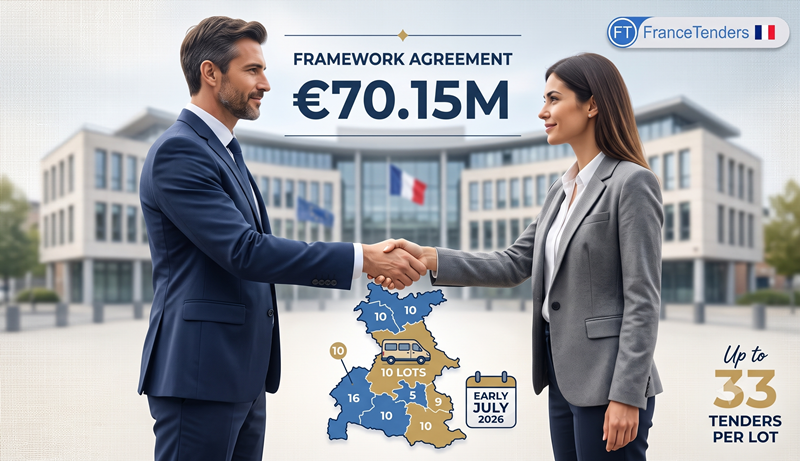
A framework agreement for specialized school transport services worth up to €70.15 million has been awarded by the Haute-Garonne Departmental Council. The contract, split across 10 geographical lots and awarded to multiple transport operators including J.L. INTERNATIONAL, SFT MOBILITE, and AUTONOMIA, demonstrates how French departments are ensuring inclusive education by providing dedicated transport for students with disabilities. Introduction Every school day in the Haute-Garonne department, hundreds of students with disabilities rely on specialized transport to access education. From adapted vehicles to trained drivers who understand their specific needs, this service is essential for inclusive education. The Haute-Garonne Departmental Council has taken a significant step to ensure this service continues by awarding a new framework agreement for school transport for students with disabilities. While not a headline-grabbing infrastructure deal, this contract is fundamental to ensuring equal access to education for students with disabilities. It reveals a great deal about how French local authorities are structuring large-scale transport procurements to serve vulnerable populations. Why This Contract Matters France's departments (départements) are responsible for organizing school transport, including specialized transport for students with disabilities. The Haute-Garonne department, with its administrative center in Toulouse, serves a population of over 1.4 million residents across 589 municipalities. Organizing transport for students with disabilities across this diverse geography is a complex logistical challenge. By structuring this procurement as a framework agreement with multiple lots, the department ensures that specialized operators can bid on specific geographical areas where they have local knowledge and capacity. This approach maximizes competition while ensuring service continuity across the entire department. Contract Timeline Previous notice referenced: 90561-2026 Contract award notice published: 16 July 2026 (OJ S 135/2026) Contracts concluded: 2 July 2026 (Lots 1-6, 8-10) and 6 July 2026 (Lot 7) Contract Overview The Haute-Garonne Departmental Council conducted an open procedure for a framework agreement for school transport for students with disabilities. The contract is structured as a framework agreement with reopening of competition, meaning that specific call-offs will be issued under the framework terms. The total estimated value of the framework agreement is €70,150,000 (excluding VAT), with the contract divided into 10 geographical lots. Each lot has a maximum number of operators who can be awarded contracts, ranging from 4 to 8 operators per lot. The award criteria were weighted: technical value (48%), corporate social and environmental responsibility (12%), and price (40%). Key Contract Details Detail Information Contracting Authority Conseil départemental de la Haute-Garonne Primary Winning Bidders J.L. INTERNATIONAL, SFT MOBILITE, AUTONOMIA, ALCIS STE GRAND SUD, MINICAR-TRANS, TITI FLORIS, CRIC APPAREILLAGE ET MOBILITE, SARL TAXIS DES ETOILES, AUTOCARS ORTET Contract Subject School transport for students with disabilities (CPV 60130000) Procedure Type Open procedure Legal Basis Directive 2014/24/EU Estimated Value (ex-VAT) €70,150,000.00 Lots 10 geographical lots Award Criteria Technical value (48%), CSR/Environmental (12%), Price (40%) EU Funding None disclosed Covered by GPA Yes Review Organisation Tribunal administratif de Toulouse Lots Overview Lot Title Max Value (€ ex-VAT) Max Operators Winners LOT-0001 Pays Frontonnais - Coteaux du Girou et de Bellevue 9,770,000 8 J.L. INTERNATIONAL, MINICAR-TRANS, SFT MOBILITE, TITI FLORIS, AUTONOMIA, ALCIS STE GRAND SUD, CRIC APPAREILLAGE ET MOBILITE LOT-0002 Blagnac - Colomiers - Saves et Garonne 6,860,000 5 J.L. INTERNATIONAL, SFT MOBILITE, AUTONOMIA, ALCIS STE GRAND SUD LOT-0003 Nord-Est Toulousain 10,600,000 7 J.L. INTERNATIONAL, MINICAR-TRANS, SFT MOBILITE, TITI FLORIS, AUTONOMIA, ALCIS STE GRAND SUD LOT-0004 Ouest Toulousain 4,620,000 4 J.L. INTERNATIONAL, AUTONOMIA, ALCIS STE GRAND SUD LOT-0005 Centre et Sud Toulousain 6,210,000 5 J.L. INTERNATIONAL, SFT MOBILITE, AUTONOMIA, ALCIS STE GRAND SUD LOT-0006 Pays du Lauragais 8,510,000 7 J.L. INTERNATIONAL, SFT MOBILITE, TITI FLORIS, AUTONOMIA, ALCIS STE GRAND SUD, CRIC APPAREILLAGE ET MOBILITE LOT-0007 Muretain - Vallée de l'Ariège 10,560,000 8 J.L. INTERNATIONAL, SARL TAXIS DES ETOILES, SFT MOBILITE, TITI FLORIS, AUTONOMIA, AUTOCARS ORTET, ALCIS STE GRAND SUD LOT-0008 Touch et Aussonelle 6,240,000 5 J.L. INTERNATIONAL, SFT MOBILITE, AUTONOMIA, ALCIS STE GRAND SUD LOT-0009 Coeur de Garonne - Volvestre - Salat 3,440,000 4 SFT MOBILITE, AUTONOMIA, ALCIS STE GRAND SUD LOT-0010 Comminges - Pyrénées Haut-Garonnaises 3,340,000 4 SFT MOBILITE, AUTONOMIA, ALCIS STE GRAND SUD About the Contracting Authority Conseil départemental de la Haute-Garonne is the departmental council responsible for organizing school transport, social services, and infrastructure across the Haute-Garonne department in southwestern France. With Toulouse as its administrative center, it serves a population of approximately 1.4 million residents across 589 municipalities. Its transport procurement function ensures that students across the department have access to education, including those with disabilities who require specialized transport arrangements. About the Winning Companies J.L. INTERNATIONAL is a large French transport operator based in Vert-Saint-Denis (Seine-et-Marne). The company was the most successful bidder in this procurement, winning every lot it bid on (Lots 1-8), demonstrating its capacity to serve the entire department. SFT MOBILITE is a large French transport operator based in Beauchamp (Val-d'Oise), part of the WEMOBILITY group. The company won all 10 lots, making it one of the most comprehensive winners in this procurement. AUTONOMIA is a micro, small, or medium-sized enterprise (SME) based in Saint-Orens-de-Gameville (Haute-Garonne). As a local operator, AUTONOMIA won all 10 lots, demonstrating that local SMEs can compete effectively in large-scale public procurements. ALCIS STE GRAND SUD is an SME based in Balma (Haute-Garonne), a suburb of Toulouse. The company won 9 of the 10 lots (all except Lot 4), showing strong regional presence and capacity. MINICAR-TRANS is a large operator based in Begles (Gironde), winning Lots 1 and 3. TITI FLORIS is a large operator based in Orvault (Loire-Atlantique), winning Lots 1, 3, 6, and 7. CRIC APPAREILLAGE ET MOBILITE is a large operator based in Toulouse, winning Lots 1 and 6. SARL TAXIS DES ETOILES is an SME based in Lannemezan (Hautes-Pyrénées), winning Lot 7. AUTOCARS ORTET is an SME based in Mondavezan (Haute-Garonne), winning Lot 7 as part of a consortium with Boubee Gerard Et Compagnie. Procurement Analysis Procedure: An open procedure was used, which is the most transparent and inclusive method under EU law, allowing any interested supplier to submit a bid. Competition: Competition levels were robust across all lots, with between 19 and 33 tenders received per lot. This indicates strong market interest in this specialized transport sector. Award Criteria: The evaluation criteria were weighted: technical value (48%), corporate social and environmental responsibility (12%), and price (40%). This balanced approach prioritizes service quality and sustainability over the lowest price, while still giving significant weight to cost. Lot Structure: The procurement was divided into 10 geographical lots, each with a maximum number of operators who can be awarded contracts. This structure enables multiple operators to serve the department, ensuring service continuity even if one operator faces operational challenges. Framework Structure: The agreement is a framework agreement with reopening of competition, meaning that specific call-offs will be issued under the framework terms. This allows the department to manage specific transport needs flexibly while maintaining the overall framework structure. Strategic Procurement: The contract includes strategic procurement elements, with the contracting authority promoting environmental and social objectives through the award criteria. GPA Status: The procurement is covered by the World Trade Organization's Government Procurement Agreement (GPA), meaning it was, in principle, open to qualifying international bidders. However, all winning bidders were French companies. Additional Procurement Facts The contract is a framework agreement with reopening of competition (accord-cadre avec remise en concurrence). Each lot is subject to a separate multi-award structure. Services are paid by unit prices. For Lot 7, Autocars Ortet was the lead bidder (mandataire) with Boubee Gerard Et Compagnie as co-tenderer. No dynamic purchasing system was used. Disputes or review requests fall to the Tribunal administratif de Toulouse. Market & Industry Perspective The specialized school transport market in France is substantial, with departments across the country running similar tenders on staggered cycles. This Haute-Garonne contract is one node in a recurring, nationwide procurement pattern rather than an isolated deal. The weighting of the award criteria (48% technical, 12% CSR/environmental, 40% price) reflects a balanced approach that values service quality and sustainability while still giving significant weight to cost. This rewards operators who can demonstrate both operational excellence and environmental responsibility. The dominance of national operators like J.L. INTERNATIONAL and SFT MOBILITE alongside local SMEs like AUTONOMIA and ALCIS STE GRAND SUD demonstrates that the market accommodates both large-scale transport groups and regional specialists. Economic Significance At up to €70.15 million over the framework period, this is a substantial contract that directly supports inclusive education across the Haute-Garonne department. Without specialized transport, many students with disabilities would face significant barriers to accessing education. The multi-operator structure also spreads economic benefits across multiple transport providers, from national groups to local SMEs, supporting employment and service capacity across the region. Future Procurement Opportunities This framework agreement, with its multi-award structure across 10 geographical lots, provides a model for other departments structuring similar transport procurements. The award criteria weighting—heavily favoring technical quality and CSR—may influence other regional buyers considering similar frameworks. Beyond this specific contract, other departments across France run comparable tenders for specialized school transport on their own cycles. This Haute-Garonne award, now itself a matter of public record, is likely to be referenced as a benchmark by other regional buyers structuring similar deals. Opportunities for Suppliers Transport operators active in the French public sector should note that specialized school transport contracts of this kind recur predictably across departments, offering a stable, non-cyclical revenue stream compared to commercial transport lines. The multi-lot structure allows both large national operators and regional SMEs to compete effectively. Firms with strong technical capabilities, environmental credentials, and local operational presence appear best positioned, given the weighting applied here. What Businesses Should Watch Whether other departments adopt similarly balanced award criteria in upcoming transport tenders. The uptake of call-offs under this framework, which will determine the contract's real financial scale beyond the framework ceilings. Whether consortium bidding patterns become more common, as seen in Lot 7. FranceTender Procurement Intelligence This contract is a useful case study in how French departments manage a structural challenge: providing specialized transport for students with disabilities across diverse geographies. The multi-lot framework agreement model solves this by dividing the department into manageable geographical areas, each with multiple operators to ensure service continuity. The most interesting signal is the award criteria. Technical quality was weighted highest at 48%, followed by price at 40%, and corporate social and environmental responsibility at 12%. This balanced approach treats transport as an operational service relationship rather than a commodity purchase, while still ensuring cost efficiency. For suppliers, the lesson is that competing on operational excellence, environmental responsibility, and local presence—not just price—is what wins these tenders. Operators that can demonstrate strong technical capacity, CSR credentials, and regional expertise are best placed as more departments renew similar transport contracts over the coming years. Supplier Takeaways Specialized school transport tenders across French departments follow a recurring, department-by-department cycle, worth mapping for pipeline visibility. Technical quality and CSR were weighted higher than price in this award; suppliers should lead proposals with operational excellence and sustainability evidence. Multi-lot frameworks allow both national and regional operators to compete effectively. Framework agreements with reopening of competition offer a balance of stability and flexibility for suppliers. Consortium bidding, as seen in Lot 7, is a structure worth considering for operators who cannot meet all requirements alone. Key Takeaways Haute-Garonne Departmental Council awarded a framework agreement for school transport for students with disabilities worth up to €70.15 million. The contract is divided into 10 geographical lots with multiple operators per lot. Award criteria: technical value (48%), CSR/environmental (12%), price (40%). J.L. INTERNATIONAL, SFT MOBILITE, and AUTONOMIA emerged as the most comprehensive winners across multiple lots. Local SMEs successfully competed alongside national transport groups. Conclusion This is not a contract that will make national headlines, but it reflects something structurally important about how French departments provide inclusive education. By structuring transport as a multi-lot framework agreement with balanced award criteria, the Haute-Garonne Departmental Council ensures that students with disabilities can access education across the entire department. Multiple operators, from national groups to local SMEs, now carry this responsibility through 2026 and beyond. Frequently Asked Questions What is the Haute-Garonne Departmental Council? It is the local authority responsible for organizing school transport, social services, and infrastructure across the Haute-Garonne department in southwestern France. What does this contract cover? It covers specialized school transport services for students with disabilities across 10 geographical lots in the Haute-Garonne department. How many operators won contracts? Nine operators won contracts across the 10 lots: J.L. INTERNATIONAL, SFT MOBILITE, AUTONOMIA, ALCIS STE GRAND SUD, MINICAR-TRANS, TITI FLORIS, CRIC APPAREILLAGE ET MOBILITE, SARL TAXIS DES ETOILES, and AUTOCARS ORTET. Why was price not the main criterion? The contracting authority weighted technical value (48%) and CSR/environmental responsibility (12%) more heavily than price (40%), prioritizing service quality and sustainability over the lowest premium. Is this contract funded by the EU? No. The notice confirms the project is not financed with EU funds, though it is governed by EU Directive 2014/24/EU and covered by the WTO's Government Procurement Agreement.Source: EU Official Journal, Contract Award Notice 491605-2026, OJ S 135/2026, published 16 July 2026.
View Details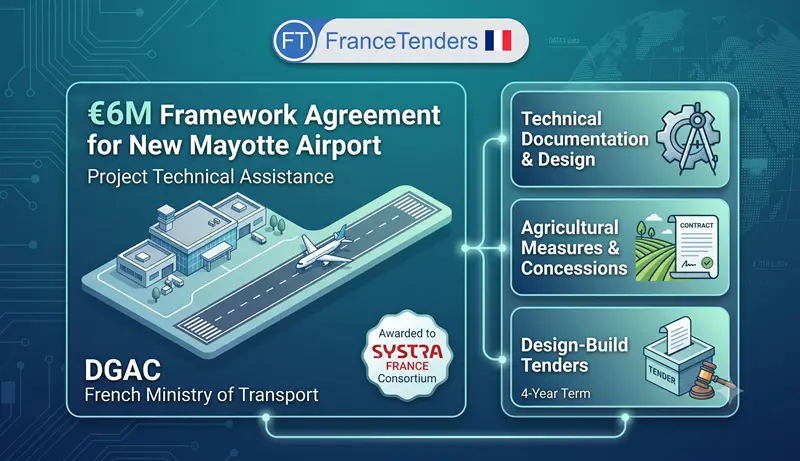
French Ministry Secures €6M Technical Assistance Framework for New Mayotte Airport with Long Runway
15 Jul 2026
French Ministry - €6M Mayotte Airport Technical Assistance The French Ministry of Transport's civil aviation authority (DGAC) has awarded a framework agreement worth up to €6 million for technical assistance in connection with the project for a new airport with a long runway in Mayotte. The deal, won by a consortium led by SYSTRA FRANCE, covers technical documentation, agricultural measures, concession and design-build tenders over a four-year term, reflecting France's commitment to developing critical infrastructure in its overseas department. Introduction Every major infrastructure project depends on expert technical oversight. When that project involves a new airport with a long runway in an overseas department, the stakes are even higher. In Mayotte, that responsibility now rests with a consortium led by SYSTRA FRANCE, after the French Ministry of Transport's Direction Générale de l'Aviation Civile (DGAC) signed off on a technical assistance framework worth up to €6 million over up to four years. It is not a headline-grabbing construction contract. But it is the kind of agreement that ensures complex infrastructure projects are properly designed, tendered and implemented, and it says a great deal about how the French government manages major capital investments in its overseas territories. Why This Contract Matters Mayotte, an overseas department of France in the Indian Ocean, has long needed improved air infrastructure. The current airport's runway limits the size of aircraft that can serve the island, constraining economic development and connectivity. A new airport with a long runway would transform Mayotte's accessibility, enabling direct flights from mainland France and other international destinations. This contract represents the technical backbone of that project. The DGAC needs expert assistance to prepare technical documentation, implement agricultural measures (likely related to land acquisition or environmental mitigation), and run competitive tenders for both a concession contract and a design-build contract. Without this technical support, the project could stall or fail to meet its objectives. Contract Timeline Previous notice referenced: 164117-2026 and 224025-2026 Contract award notice published: 15 July 2026 (OJ S 134/2026) Winner chosen: 7 May 2026 Contract concluded: 15 June 2026 Initial term: 12 months Maximum renewals: 3 x 12 months Maximum total term: 48 months (4 years) Contract Overview The DGAC ran an open procedure under EU Directive 2014/24/EU, receiving two tenders. The result is a framework agreement without reopening of competition with a consortium of nine organisations, led by SYSTRA FRANCE. The framework covers technical assistance for: Preparation of technical documentation necessary for the operation Implementation of agricultural measures Competitive tendering for a concession contract and a design-build contract Technical questions related to the operation The contract is structured as a framework agreement with a maximum value of €6 million, renewable annually up to three times. Key Contract Details Detail Information Contracting authority Ministère des transports - DGAC (French civil aviation authority) Winning consortium (leader) SYSTRA FRANCE Consortium members AEROPORTS DE LA COTE D'AZUR, EKIUM Subcontractors AMARISK, EUROTRANS, BRL Ingénierie, M'ZE CONSEIL, NEO ECO DEVELOPPEMENT Contract subject Technical assistance for new airport project, CPV 71311240 Procedure type Open procedure Legal basis EU Directive 2014/24/EU Maximum framework value €6,000,000 Initial term 12 months Maximum term 48 months (incl. 3 renewals of 12 months) Tender value €5,008,796 Bids received 2 EU funding None disclosed Covered by GPA Yes Winner chosen 7 May 2026 Contract signed 15 June 2026 Project Scope The framework covers technical assistance for the project of a new airport with a long runway in Mayotte. The scope includes: Preparation of technical documentation necessary for the operation Implementation of agricultural measures (likely relating to land acquisition, resettlement or environmental mitigation) Competitive tendering for both a concession contract and a design-build contract Technical questions related to the operation The services must be delivered both in Paris and in Mayotte, with certain services requiring mandatory presence on the island. About the Contracting Authority The Direction Générale de l'Aviation Civile (DGAC) is the French civil aviation authority, operating under the Ministry of Transport. It is responsible for regulating and developing civil aviation in France and its overseas territories, including airport infrastructure. The DGAC is the project owner for the new Mayotte airport. About the Winning Consortium The winning consortium is led by SYSTRA FRANCE, a large French engineering and consulting group specialising in transport infrastructure. SYSTRA is globally recognised for its expertise in airports, railways and urban transport. The consortium includes: AEROPORTS DE LA COTE D'AZUR (ACA) - The airport operator for Nice and other French Riviera airports, bringing operational airport expertise EKIUM - A large French engineering and consulting firm The consortium also works with a network of subcontractors: AMARISK - Small consultancy EUROTRANS - Small consultancy specialising in transport BRL Ingénierie - Large engineering firm specialising in water, environment and infrastructure M'ZE CONSEIL - Medium-sized consultancy based in Mayotte, providing local expertise NEO ECO DEVELOPPEMENT - Medium-sized environmental consultancy This consortium structure brings together international engineering expertise (SYSTRA, EKIUM), operational airport management knowledge (ACA), local presence (M'ZE CONSEIL) and specialist environmental and agricultural expertise (BRL, NEO ECO DEVELOPPEMENT). Procurement Analysis Procedure: An open procedure was used, meaning any interested supplier could submit a tender. This is the standard route for service contracts where requirements are well-defined. Competition: Two tenders were received. This is a relatively low level of competition, likely reflecting the specialist nature of the services required and the limited number of firms with the necessary airport infrastructure expertise and ability to work in Mayotte. Evaluation criteria: Quality carried the dominant weight (60%) compared to price (40%). The quality criteria were structured as: Criterion Weight Team quality and relevance (sub-criteria 1.1 and 1.2) 30% Technical proposal quality and relevance (sub-criteria 2.1, 2.2, 2.3) 30% Price 40% The weighting of quality over price reflects the complex, high-stakes nature of the project. The DGAC prioritises technical competence and understanding of the project's challenges over cost alone. Framework structure: The agreement is a framework agreement without reopening of competition, meaning the consortium will deliver all call-off orders directly for the duration, without re-tendering individual assignments. GPA status: The contract falls under the WTO's Government Procurement Agreement, meaning it was open to qualifying international bidders, though the winning consortium is entirely French. Additional Procurement Facts The contract references two previous notices (164117-2026 and 224025-2026), indicating a phased procurement process. The procedure was not accelerated, indicating a standard timeline was followed. No dynamic purchasing system was used. Disputes or review requests fall to the Tribunal Administratif de Mayotte, the administrative court on the island. Some services require mandatory presence in Mayotte, which is explicitly stated in the notice. Market & Industry Perspective Airport infrastructure projects in overseas territories present unique challenges. They require specialist expertise in airport planning and design, concession structuring, environmental management and local stakeholder engagement. The French government has increasingly turned to framework agreements to secure this expertise on a long-term basis. This contract is part of a broader trend in French public procurement: using framework agreements to secure technical assistance for complex, multi-year infrastructure projects. The four-year maximum term gives the DGAC access to a stable team of experts, while the consortium structure brings together complementary skills that no single firm could provide alone. Economic Significance At up to €6 million over four years, this contract represents a significant investment in the technical preparation of the Mayotte airport project. The actual value of the tender is €5,008,796, slightly below the maximum, suggesting that the DGAC has budgeted for potential additional services or cost overruns. For the consortium, the contract offers predictable revenue and a strong reference in airport infrastructure planning, particularly in overseas territories. For Mayotte, the contract is a critical step toward a project that could transform the island's economy and connectivity. Future Procurement Opportunities The framework covers tendering of the concession contract and the design-build contract. These future procurements will be significant: the concession contract will likely involve a private operator financing, building and operating the airport, while the design-build contract will involve the actual construction of the runway and terminal facilities. These future contracts are likely to be large and attract international interest from airport operators, construction firms and infrastructure investors. The consortium winning this technical assistance contract will play a key role in structuring and managing those tenders. Opportunities for Suppliers For engineering and consulting firms, the contract demonstrates the value of consortium bidding for complex infrastructure projects. SYSTRA's leadership of a diverse consortium, including a local Mayotte firm, sets a template for other firms bidding for similar work. For firms interested in the future concession and design-build contracts, engaging with the consortium early may provide strategic advantages, as the consortium will be responsible for preparing the tender documentation. What Businesses Should Watch The future concession and design-build tenders for the Mayotte airport, which will be major opportunities for international firms. The implementation of agricultural measures, which may create opportunities for environmental and agricultural consultants. Whether other French overseas territories adopt similar framework agreements for infrastructure planning. FranceTenders Procurement Intelligence This contract is a case study in how the French government manages complex infrastructure projects in overseas territories. By using a framework agreement for technical assistance, the DGAC ensures continuity of expertise over a multi-year project, while the consortium structure brings together the necessary diverse skills. The weighting of quality over price is notable. For complex technical assistance, the DGAC prioritises competence over cost, recognising that poor technical advice can lead to project delays or failures that cost far more than the fees saved through lower-priced bids. The inclusion of a local firm (M'ZE CONSEIL) in the consortium is also significant. For projects in overseas territories, local knowledge and presence are critical, and the DGAC clearly values this. This may encourage other firms bidding for similar work to partner with local firms. Supplier Takeaways Quality is weighted more heavily than price; firms should focus on demonstrating technical excellence and understanding of project challenges. Consortium bidding with complementary skills is a proven structure for complex infrastructure projects. Local presence and expertise in Mayotte are highly valued. The four-year framework offers revenue predictability for winners. The contract provides a strategic position for influencing future concession and design-build tenders. Key Takeaways DGAC awarded a €6 million technical assistance framework for a new airport with a long runway in Mayotte. The consortium is led by SYSTRA FRANCE, with AEROPORTS DE LA COTE D'AZUR and EKIUM. The contract runs for an initial 12 months, with three optional 12-month renewals. Two bids were received through an open procedure weighted toward quality (60%) over price (40%). The framework covers technical documentation, agricultural measures, and tendering for concession and design-build contracts. The contract is covered by the GPA and involves mandatory presence in Mayotte. Conclusion This is not a construction contract, but it is the contract that makes the construction possible. By securing expert technical assistance through a long-term framework agreement, the DGAC has laid the groundwork for a transformative infrastructure project in Mayotte. The consortium led by SYSTRA FRANCE now carries that responsibility through to 2030, helping to shape the future of air travel in this Indian Ocean department. Frequently Asked Questions Q: What is the DGAC? The Direction Générale de l'Aviation Civile is the French civil aviation authority, responsible for regulating and developing civil aviation in France and its overseas territories. Q: What is a framework agreement? It is a master contract that sets terms for future services. The buyer is not obliged to use all the value, but when it does, it can do so under agreed conditions without running a new full tender. Q: Why does this contract involve agricultural measures? Agricultural measures likely relate to land acquisition, resettlement of farmers, or environmental mitigation required for the new airport project. Q: What is a concession contract? A concession is a public-private partnership where a private operator finances, builds and operates infrastructure (like an airport) in return for the right to collect revenue (like passenger fees) over a long period. Q: What is a design-build contract? A design-build contract is a single contract where one firm designs and constructs the infrastructure, offering a single point of responsibility compared to separate design and construction contracts. Q: Is this contract covered by the GPA? Yes. The procurement is covered by the WTO's Government Procurement Agreement, meaning it was, in principle, open to qualifying international bidders.Source: EU Official Journal, Notice publication number: 488363-2026, OJ S 134/2026, published 15 July 2026.
View Details
Mayenne Locks In a €14.5 Million, Four-Year Deal to Transport Students with Disabilities Across 28 Routes
14 Jul 2026
The Conseil Départemental de la Mayenne has awarded a 28-lot framework agreement, worth up to €14,567,200, for the daily transport of students and young people with disabilities living across the department. Three specialist transport operators, ALCIS Ste Grand Sud, ST2S, and SFT Mobilité, will share the routes for the next 12 months, with the contract renewable three more times for up to four years in total. Introduction Every school day, students with disabilities across the Mayenne department need reliable, accessible transport to reach their schools, specialist institutions, and higher education establishments. Conseil Départemental de la Mayenne, the departmental authority, has now secured that transport through 28 separate route-based contracts covering towns and circuits from Ernée to Laval, Château-Gontier to Évron, and beyond. It is a highly localised contract, split into as many pieces as there are transport routes, but together it forms one of the department's more complex service procurements: a network of daily accessible transport serving a vulnerable student population. Why This Contract Matters Transporting students with disabilities is not a simple bus route: it typically requires adapted vehicles, trained drivers, and reliable timing tied to school and therapy schedules. Splitting the contract into 28 geographically defined lots lets the department match local operators to specific circuits, rather than forcing a single national operator to cover the entire department. For the winning transport companies, the contract secures a stable, multi-year revenue stream in a specialised transport niche that depends on consistent public sector demand. Contract Timeline Previous framework notice referenced: 136910-2026 Contracts concluded: 23 June 2026 (all 28 lots) Contract award notice published: 14 July 2026 (OJ S 133/2026) Service period begins: 1 August 2026 Initial term: 12 months Renewable: 3 times, 12 months each, up to 4 years total Contract Overview The department ran a single open procedure covering 28 lots, each corresponding to a specific transport circuit or town, including one dedicated lot for vehicles adapted for passengers with reduced mobility, and one lot serving a specialist school for deaf youth in Rennes. Each lot was independently tendered and awarded, with results ranging from as few as 7 to as many as 10 tenders received per route. Across all 28 lots combined, tenders totalled approximately €14.5 million, just under the notice's overall framework ceiling of €14,567,200. Key Contract Details Project Scope The contract covers daily transport of students and young people with disabilities domiciled in the Mayenne department, structured as an accord-cadre (framework agreement with a maximum value) that will generate individual purchase orders ("bons de commande") over its term. Routes span towns including Ernée, Gorron, Craon, Cossé-le-Vivien, Château-Gontier-sur-Mayenne, Mayenne, Villaines-la-Juhel, Évron, Laval (north and south), Bonchamp-lès-Laval, Montsûrs, Port-Brillet, L'Huisserie, Meslay-du-Maine, Saint-Berthevin, Pré-en-Pail, Renazé, and Changé, along with dedicated lots for adapted-vehicle transport and for students attending a specialist school for the deaf in Rennes. Each lot was evaluated on technical value of the offer (35%), environmental performance (5%), and price (60%), giving price the largest single weight while still rewarding service quality and environmental practice. About the Contracting Authority Conseil Départemental de la Mayenne is the local authority responsible for general public services across the Mayenne department in northwestern France, including the statutory duty to arrange transport for students with disabilities to and from their places of education. About the Winning Companies ALCIS Ste Grand Sud, based in Balma near Toulouse, won the largest share of routes: 20 of the 28 lots, spanning circuits across nearly every town covered by the tender. ST2S, based in Saint-Étienne-de-Montluc near Nantes, won 7 lots, including both Château-Gontier circuit B and several routes around Laval, Montsûrs, Port-Brillet, L'Huisserie, and Renazé. SFT Mobilité, based in Beauchamp near Paris, won a single lot covering the Évron circuit B route. All three are large operators, and none of the winning tenders involved subcontracting or was submitted as a variant bid. Procurement Analysis Procedure: A single open procedure was run across all 28 lots simultaneously, letting the department compare bids for each route independently while managing the tender as one coordinated process. Competition: Competition was strong and consistent, with each lot drawing between 7 and 10 tenders, almost all submitted electronically, indicating a healthy, well-established specialist transport market willing to bid on individual circuits. Evaluation criteria: Price carried 60% of the weighting, technical value of the offer 35%, and environmental performance 5%, applied identically across all 28 lots. Framework structure: Each lot is a framework agreement without reopening of competition, meaning the winning operator for each route will fulfil call-off orders directly for the duration of the agreement. GPA status: The contracts fall under the World Trade Organization's Government Procurement Agreement, meaning they were, in principle, open to qualifying international bidders, though all three winners are French operators. Additional Procurement Facts The contracts reference a prior notice (136910-2026), which established the earlier stage of this procurement. None of the lots were financed with EU funds. Each lot's strategic procurement approach targeted "other" environmental impact reduction measures, applied consistently across all 28 routes. Disputes or review requests fall to the Tribunal Administratif de Nantes, with specific statutory deadlines for pre-contractual, contractual, and validity challenges. One lot (L'Huisserie, LOT-0021) recorded its 9 tenders as coming specifically from micro, small, or medium enterprises, a detail not repeated for the other lots. Market and Industry Perspective Specialised student transport for young people with disabilities is a recurring, non-cyclical segment of French public procurement, sustained by a legal obligation on departments to provide it. Splitting a departmental tender into dozens of geographically defined lots, as Mayenne has done here, is a common structure that lets both large national operators and smaller regional players compete for individual circuits rather than requiring one company to cover an entire department. The dominance of a single winner, ALCIS Ste Grand Sud, across 20 of the 28 lots suggests either particularly competitive pricing or strong operational capacity to service a large number of routes simultaneously, while ST2S and SFT Mobilité picked up the remaining circuits where they were more competitive. Economic Significance At up to €14.57 million across four years, this is a meaningful, if unglamorous, public transport commitment. Beyond the headline figure, it directly enables continued education access for students with disabilities across dozens of towns in the Mayenne department, some of whom would otherwise face significant barriers to attending school or specialist institutions. Future Procurement Opportunities With three renewal options of 12 months each built into every lot, this framework could remain in place without a new tender until 2030. Other French departments managing similar student transport obligations may look to Mayenne's lot structure, and its 60% price-weighted, multi-operator award pattern, as a reference for their own procurements. Opportunities for Suppliers Specialist transport operators serving the disability and education sectors should note that departmental tenders of this kind recur on a lot-by-lot basis and reward operators who can offer competitive pricing while maintaining the technical and environmental standards required for vulnerable passenger transport. The presence of 7 to 10 bidders per lot signals a competitive but accessible market for well-positioned regional operators. What Businesses Should Watch Whether Mayenne exercises its renewal options across all 28 lots as the initial 12-month term nears its end. Whether other French departments adopt a similar 60% price / 35% quality / 5% environmental weighting for comparable transport tenders. How the balance between large, multi-lot winners like ALCIS and smaller, single-lot winners like SFT Mobilité evolves in future rounds. Procurement Intelligence Commentary This contract shows how French departments manage large, geographically fragmented service obligations: by breaking a single, complex need into dozens of independently tendered, comparably structured lots. The result is a market where specialist operators can compete route by route, and where one dominant bidder, ALCIS Ste Grand Sud, can win the bulk of the work while smaller competitors like SFT Mobilité still find a foothold on individual circuits. For departments, the approach balances economies of scale for large operators against real competitive tension, evidenced by 7 to 10 bidders per lot, a healthier competitive picture than many single-lot public contracts achieve. Supplier Takeaways Large, multi-lot student transport tenders can be won disproportionately by a single operator with strong pricing across many routes. Price was weighted at 60% across all lots, making cost competitiveness the dominant factor for bidders. Even in tenders dominated by one large winner, smaller operators can still secure individual lots where their positioning is strongest. Multi-year renewal options (here, up to 3 additional 12-month terms) offer long-term revenue visibility once a lot is won. Key Takeaways Mayenne awarded a 28-lot framework agreement for disabled student transport worth up to €14,567,200. ALCIS Ste Grand Sud won 20 lots, ST2S won 7, and SFT Mobilité won 1. Each lot runs 12 months from August 2026, renewable 3 times for up to 4 years total. Award criteria were 60% price, 35% technical value, and 5% environmental performance across all lots. Competition was strong, with 7 to 10 tenders received per lot. Conclusion This is a large but quiet contract that will not make national headlines, yet it directly determines whether students with disabilities across dozens of Mayenne towns can reliably get to school. By splitting the need into 28 competitively tendered lots, the department has secured strong competition and multi-year continuity, with ALCIS Ste Grand Sud, ST2S, and SFT Mobilité now responsible for keeping that transport running through at least mid-2027, and potentially through 2030. Frequently Asked Questions Q: Why was this contract split into 28 lots? Each lot corresponds to a specific transport circuit or town, allowing local and regional operators to bid on individual routes rather than requiring one company to cover the entire department. Q: Who won the most lots? ALCIS Ste Grand Sud, based near Toulouse, won 20 of the 28 lots, the largest share by far. Q: How long does the contract run? Each lot runs for an initial 12 months from August 2026, with up to 3 renewal periods of 12 months each, for a maximum of 4 years. Q: Is this contract funded by the EU? No. The notice confirms none of the lots were financed with EU funds, though they are governed by EU Directive 2014/24/EU and covered by the WTO's Government Procurement Agreement. Lot-by-Lot Winner Summary LotRoute / TitleWinnerTender ValueBids Received 1Ernée - circuit AALCIS Ste Grand Sud€264,0009 2Ernée - circuit BALCIS Ste Grand Sud€234,00010 3GorronALCIS Ste Grand Sud€220,0009 4Craon - circuit AALCIS Ste Grand Sud€328,0008 5Craon - circuit BALCIS Ste Grand Sud€328,00010 6Cossé le VivienALCIS Ste Grand Sud€408,0008 7Château Gontier sur Mayenne - circuit AALCIS Ste Grand Sud€552,0007 8Château Gontier sur Mayenne - circuit BST2S€368,00010 9Mayenne - circuit AALCIS Ste Grand Sud€940,0008 10Mayenne - circuit BST2S€940,0009 11Villaines la JuhelALCIS Ste Grand Sud€232,0008 12Evron - circuit AALCIS Ste Grand Sud€272,0009 13Evron - circuit BSFT Mobilité€272,00010 14Laval nord et établissements d'études supérieures - circuit AALCIS Ste Grand Sud€1,484,0008 15Laval nord - circuit BALCIS Ste Grand Sud€1,484,0009 16Laval sud et établissements d'études supérieures - circuit AALCIS Ste Grand Sud€1,484,0007 17Laval sud - circuit BST2S€1,484,0009 18Bonchamp-les-LavalALCIS Ste Grand Sud€188,00010 19MontsûrsST2S€224,0009 20Port BrilletST2S€184,0009 21L'HuisserieST2S€216,0009 22Meslay-du-MaineALCIS Ste Grand Sud€292,0008 23Saint-BerthevinALCIS Ste Grand Sud€256,00010 24Pré-en-PailALCIS Ste Grand Sud€216,0009 25RenazéST2S€148,0008 26Véhicules pour personnes à mobilité réduiteALCIS Ste Grand Sud€1,164,0008 27PEJS Rennes (Pôle d'enseignement des jeunes sourds)ALCIS Ste Grand Sud€139,2009 28ChangéALCIS Ste Grand Sud€216,0009 Contract Details DetailInformation Contracting authorityConseil Départemental de la Mayenne Number of lots28 Winning biddersALCIS Ste Grand Sud (20 lots), ST2S (7 lots), SFT Mobilité (1 lot) Contract subjectTransport of students and young people with disabilities, CPV 60112000 Procedure typeOpen procedure Legal basisEU Directive 2014/24/EU Maximum framework value (all lots)€14,567,200 Combined tender value (all lots)approx. €14,537,200 Initial contract duration12 months from 1 August 2026 Maximum duration with renewals4 years (3 renewals of 12 months each) Award criteria60% Price / 35% Technical Value / 5% Environmental Performance Covered by GPAYes Review organisationTribunal Administratif de Nantes Contracts signed23 June 2026 Source: EU Official Journal, Notice publication number: 486424-2026, OJ S 133/2026, published 14 July 2026.
View Details